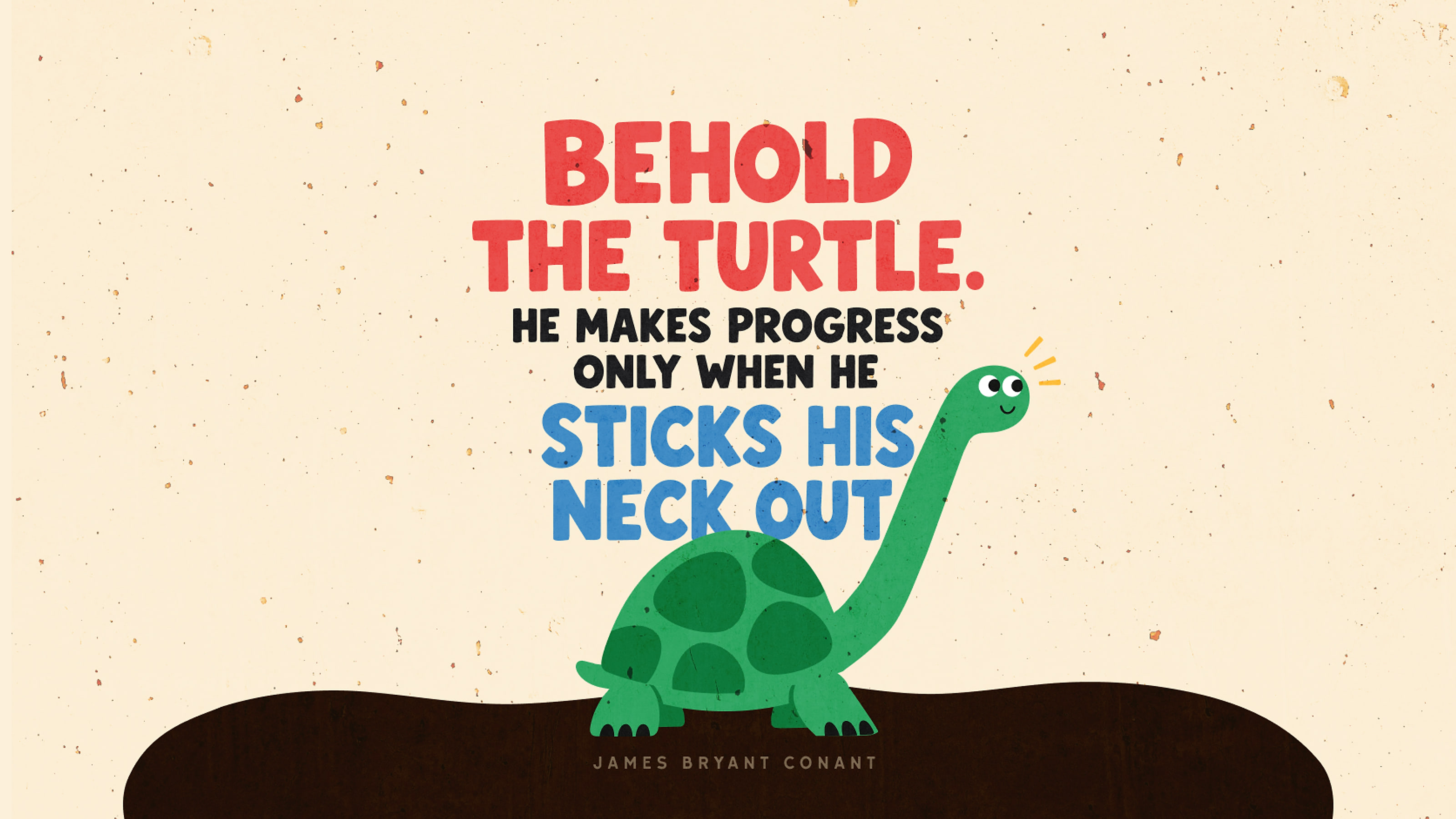
Eastern Long-necked Turtle (Chelodina longicollis)
The Eastern Long-necked Turtle (Chelodina longicollis) is a freshwater turtle found in slow rivers and swamps of eastern Australia, listed Least Concern on the IUCN Red List.
- Common name
- Eastern Long-necked Turtle
- Scientific name
- Chelodina longicollis
- Conservation status (IUCN Red List)
- Least Concern
- Habitat
- Slow rivers & swamps of eastern Australia
- Edition
- TT-27: Neck Out
A neck about 60% the length of its shell that folds sideways under the rim, and a musk it releases when alarmed.
It is Turtle Tuesday edition TT-27, “Neck Out”, drawn by hand and free to download.
Behold the turtle. James Bryant Conant’s line about progress has been on posters for decades, and it turns out he picked exactly the right animal for slightly the wrong reason. The eastern long-necked turtle of Australia is a side-necked turtle, and it doesn’t pull its head straight back into its shell the way you’re picturing. It can’t. It swings the neck sideways instead, folding it under the rim in front of a front leg, and even then the neck stays partly out, the shell’s overhang covering what it can. So here’s an animal that spends its whole life sticking its neck out, about 60 percent of its shell length of it, with no option to do otherwise. It gets on with things anyway: walking overland between drying swamps, hunting tadpoles and small fish, and releasing a memorable musk from glands in its armpits when the day goes badly. Locals call it the stinker. It makes progress. It was simply never given the choice not to.
The eastern long-necked turtle (Chelodina longicollis) is the most familiar freshwater turtle across eastern Australia. Its neck runs about 60 percent of its shell length, and as a pleurodire it retracts by bending the neck sideways, so it never fully withdraws. It walks overland between wetlands, which is why so many are struck by cars. Alarmed, it releases an offensive musk from its armpits and groin, the reason it’s nicknamed the stinker. In 2023 it became the first side-necked turtle documented overwintering under ice, frozen in for 15 days.
The Turtle That Cannot Take It Back
The eastern long-necked turtle (Chelodina longicollis) is the most familiar freshwater turtle in eastern Australia, ranging from west of Adelaide east through Victoria, the Northern Territory and New South Wales, north to the Fitzroy River in Queensland. What you notice is never the shell. It’s the neck, which runs about 60 percent of the length of the carapace and moves like something borrowed from a different animal.
That neck is why it belongs to the Pleurodira, the side-necked turtles. A hidden-necked turtle folds its neck vertically, drawing the head back between the forelegs until it disappears. A pleurodire can’t: spool-shaped neck vertebrae favor sideways movement, tucking the head in front of one front leg instead. This turtle is never entirely put away.
It’s also a walker, making long overland migrations between wetlands and estivating on land, so it can use swamps that dry out. When a wetland dries, it leaves and finds another. The cost in a modern landscape is roads: a turtle crossing open ground toward the next waterhole is a turtle in traffic. In 2023 it became the first documented case of a side-necked turtle overwintering under ice, frozen in for fifteen days.
The rest is straightforwardly opportunistic: a carnivore taking insects, worms, tadpoles, frogs, small fish and carrion. Frightened, it deploys the defense behind its nickname: an offensive musk from glands in its armpits and groin. Around eastern Australia it’s known as the stinker, which is unkind but fair.
Key Moments
- 1794: Shaw formally describes the species; longicollis means, plainly enough, long-necked
- Across eastern Australia: It settles into slow rivers, swamps and wetlands from west of Adelaide east through Victoria and NSW to the Fitzroy River in Queensland
- When the swamp dries: Rather than wait it walks, migrating overland between wetlands, using temporary water other turtles cannot
- 2023: It supplies the first documented case of a side-necked turtle overwintering under ice, frozen in for fifteen days
- Present day: Still Least Concern, but on a 1996 IUCN assessment flagged as needing updating, while foxes, roads and drying wetlands press on it locally
Fun Facts
- Sixty Percent Neck: The neck runs about 60 percent of the length of its shell, most of the reason it looks the way it does
- It Folds Sideways: As a pleurodire it bends the neck horizontally, tucking the head in front of a front leg instead of pulling it straight back
- Never Fully Hidden: A side-necked turtle can’t completely withdraw: the neck stays partly exposed, the shell overhanging to shield the rest
- Known as the Stinker: When alarmed it releases an offensive musk from glands in its armpits and groin
- It Walks Between Swamps: Long overland walks carry it between temporary wetlands, so it keeps a few ponds on rotation
- Fifteen Days Under Ice: In 2023 it became the first side-necked turtle documented overwintering under ice
Conservation Notes
- The eastern long-necked turtle is listed as Least Concern, but that assessment was made in 1996 and is flagged as needing updating. The species isn’t listed under Australia’s EPBC Act or any state law.
- The threats add up: foxes preying on nests, vehicle strikes on adults crossing between wetlands, pest fencing interrupting those routes, and drought and climate change drying the swamps this turtle depends on.
Mini FAQ
Why can it not pull its head straight into its shell?
It’s built the other way around. It’s a pleurodire, and its spool-shaped neck vertebrae favor sideways movement. Instead of folding vertically and drawing the head back between the forelegs like a hidden-necked turtle does, it bends the neck horizontally, tucking the head in front of one front leg. This turtle never entirely disappears.
Why is it called the stinker?
Because it earns it. Handled or frightened, it releases an offensive musk from its armpits and groin, a cheap, effective deterrent for an animal that can’t fully withdraw into its shell, and anything that gets a mouthful tends not to try again. The smell is memorable enough that the nickname followed it across eastern Australia.
Is it endangered?
Officially no: it’s Least Concern. But the listing is old, from a 1996 assessment flagged as needing updating. The swamps it depends on are drying in a changing climate, and its long walks between wetlands cross a lot of roads. Common isn’t the same as safe, so slow down if you see one crossing.
Art by Lee Eisenbarth, CC BY 4.0: how to use this art.
Sources: IUCN Red List, Wikipedia.