Egyptian Tortoise (Testudo kleinmanni)
The Egyptian Tortoise (Testudo kleinmanni) is a tortoise found in deserts of Egypt and Libya, listed Critically Endangered on the IUCN Red List.
- Common name
- Egyptian Tortoise
- Scientific name
- Testudo kleinmanni
- Conservation status (IUCN Red List)
- Critically Endangered
- Habitat
- Deserts of Egypt & Libya
- Edition
- TT-24: Pocket Giant
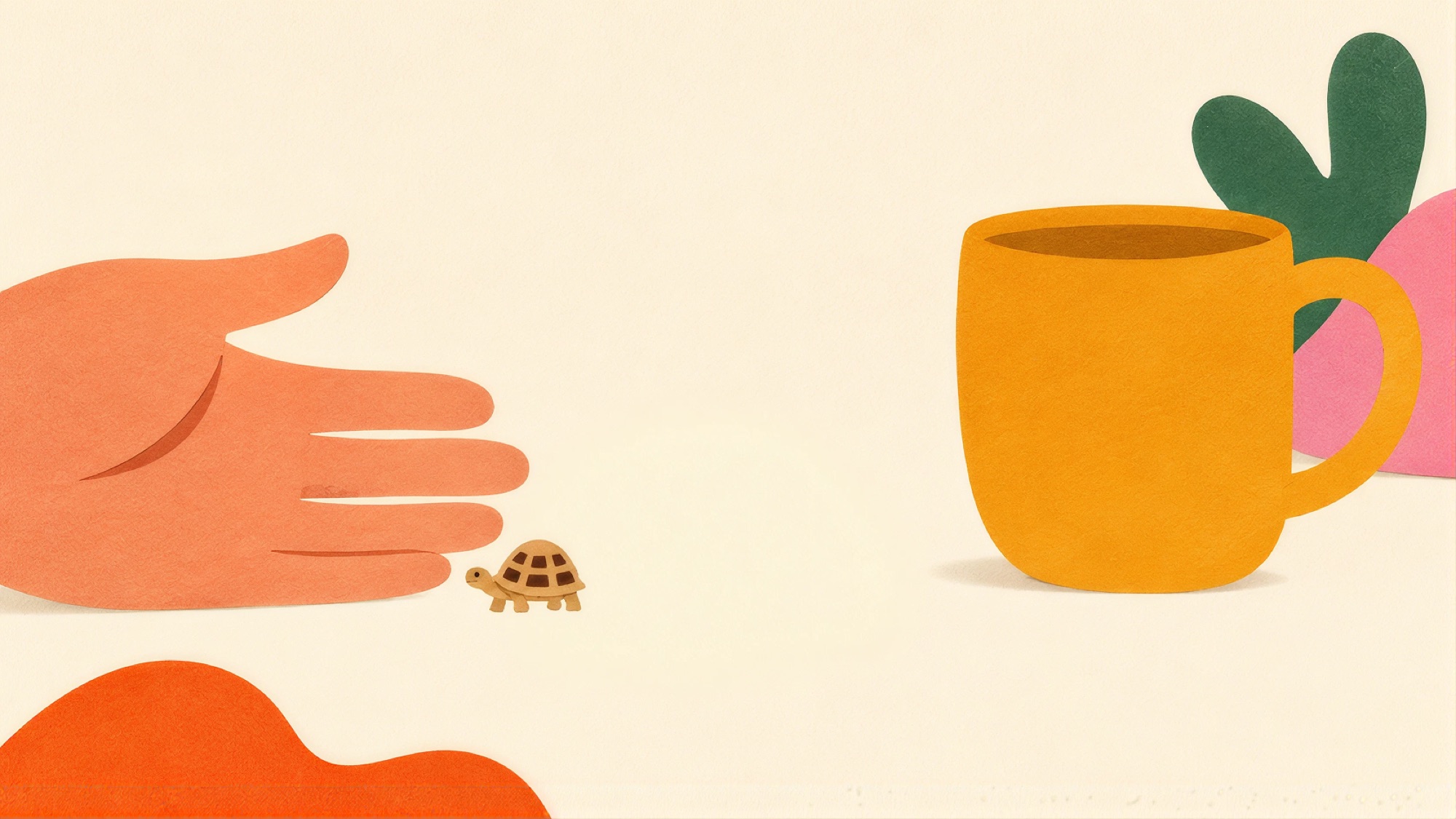
The smallest tortoise in the Northern Hemisphere: a palm-sized desert survivor, Critically Endangered and all but gone from Egypt.
It is Turtle Tuesday edition TT-24, “Pocket Giant”, drawn by hand and free to download.
This drawing is one of the 26 in Color the Shell, the Turtle Tuesday turtle coloring book: the same line art in black and white, with one true fact per turtle.
Yes, that is the whole tortoise. The Egyptian tortoise is the smallest tortoise in the Northern Hemisphere, small enough to sit in a palm with room to spare, and it makes its living in one of the harshest addresses on the planet: North African coastal desert where less than 50 millimeters of rain falls in a year. The high domed shell runs pale, ivory to gold to dull yellow, because a lighter shell reflects the sun and lets it stay out in the heat a little longer before burying itself in sand. The males even sing: alone among Mediterranean tortoises, a courting male calls like a mourning dove. It’s Critically Endangered; by 2006 only ten wild individuals were known in Egypt, near Lake Bardawil. The species now hangs on mostly in Libya. A palm-sized reminder of how quietly a thing can nearly disappear.
The Egyptian tortoise is the smallest tortoise in the Northern Hemisphere, small enough to sit in the palm of a hand. Unusually, the females are the larger sex. It lives on sand and gravel plains across a strip of North Africa that gets less than 50 millimeters of rain a year, and its pale shell lets it stay active in the heat longer before burrowing into the sand. Alone among Mediterranean tortoises, a courting male makes a soft call compared to a mourning dove. The species is Critically Endangered.
The Smallest Tortoise in the North
The Egyptian tortoise (Testudo kleinmanni), also called Kleinmann’s tortoise, is the smallest tortoise in the Northern Hemisphere. A full-grown adult sits in the palm of a hand, and in a reversal of the usual pattern the females are the larger sex, males smaller and longer-tailed. The shell is pale ivory, gold or dull yellow.
That pale shell is a desert adaptation. The species lives on sand and gravel plains and coastal salt marsh along the North African coast, where less than 50 millimeters of rain falls a year. A lighter carapace reflects more sunlight, letting it forage in the heat longer before burying itself in sand.
It also does something no other Mediterranean tortoise does: it sings. A courting male produces a soft, repeated call compared to the cooing of a mourning dove, unexpected from an animal most people assume is silent.
The story turns hard from there. The Egyptian tortoise is Critically Endangered and listed on CITES Appendix I. Its Egyptian range has been almost entirely converted to agriculture or stripped by collectors, and by 2006 only about ten wild individuals were still known in Egypt, near Lake Bardawil. The surviving wild population is now mainly in Libya.
Key Moments
- 1883: The species is described and named for Wilhelm Kleinmann
- 20th century: Coastal desert habitat in Egypt is steadily converted to agriculture and settlement, while pet trade collection accelerates
- 1994: Listed on CITES Appendix I, banning commercial international trade in wild-caught animals
- 2006: Surveys find only around ten wild tortoises still known in Egypt, near Lake Bardawil
- Present day: Assessed as Critically Endangered, surviving in the wild mainly in Libya
Fun Facts
- Palm-Sized: It’s the smallest tortoise in the Northern Hemisphere, small enough to sit in the palm of a hand
- Females Are Bigger: In a reversal of the usual pattern, females outgrow the smaller, slimmer, longer-tailed males
- Pale on Purpose: The ivory-to-gold shell reflects sunlight, letting a small body stay out in the desert heat longer
- It Sings: Alone among Mediterranean tortoises, a courting male makes a soft call likened to a mourning dove
- Under 50mm of Rain: It lives on North African sand and gravel plains that see less than 50 millimeters of rain a year
- Winter Person: Most active in the cooler months, it lies low through the hottest stretch of summer
Conservation Notes
- The Egyptian tortoise is Critically Endangered and listed on CITES Appendix I. Its Egyptian range has been all but destroyed by agriculture and pet trade collection: by 2006 only around ten wild individuals were still known in the country, near Lake Bardawil.
- The surviving population is now mainly in Libya, itself under pressure, putting unusual weight on a single stronghold. Captive populations are central to its future.
- A 2005 assessment for the IUCN Red List estimated about 7,500 Egyptian tortoises left in the wild, around 5,000 of them adults.
Mini FAQ
How small is the Egyptian tortoise, really?
It’s the smallest tortoise in the Northern Hemisphere, and a full-grown adult fits in the palm of a hand. In a twist on the usual rules, females are the larger sex, males smaller and longer-tailed.
Why does its shell make a cooing sound? Wait, the shell?
Not the shell, the tortoise. Alone among Mediterranean tortoises, a courting male makes a soft, repeated call compared to a mourning dove’s coo. Most tortoises are effectively silent, so that call can be one of the clearest signs one is nearby.
Where does it live now?
Mostly in Libya. Its sandy coastal home in Egypt has largely become farmland, and by 2006 only about ten wild tortoises were known there, near Lake Bardawil.
Art by Lee Eisenbarth, CC BY 4.0: how to use this art.
Sources: IUCN Red List, Wikipedia.